
If you’ve been wondering whether homeschooling is financially possible, whether homeschooling on a budget is realistic, let me save you some panic.
You do not need a house full of Montessori equipment, a private tutor for every subject, twelve subscriptions, and a bank account that looks like it belongs to Elon Musk.
In fact, after almost 18 months of homeschooling my son, I’ve discovered something rather lovely:
You can give your child an incredibly rich, varied education without spending very much money at all.
Right now, we’re spending around $30 a week on our regular homeschooling activities.
And my son has a very vibrant schedule.
He has access to specialist teachers, language classes, music, science, sport, social groups, workshops, books, educational games, volunteering, nature experiences, creative activities and plenty of opportunities to simply be an eight-year-old.
Sure, we occasionally pay for a special workshop or activity that takes us above the $30 a week amount I just mentioned.
But generally speaking, our homeschooling is very cheap.
Not because we can’t afford to spend more.
But because we’ve discovered that, most of the time, you don’t need to.
You just need to know where to look.
Then homeschooling on a budget becomes a fun educational adventure.
Now before we dive into the practical stuff, if you’re considering homeschooling and feeling a little unsure about whether it could actually work for your family, I’ve talked about our experience in my podcast, I Love Me with Tamra Mercieca, in Episode 105: Why I Decided To Homeschool My Son.
If you’re needing a little reassurance, a different perspective, or just want to hear what homeschooling can actually looked like, I’d start there.
Otherwise…
Let’s go shopping.
Except we’re not really shopping.
Because that would defeat the entire point!
We’re homeschooling on a budget.
Right… let’s start with…
1. Homeschooling Facebook Groups
If you homeschool, local homeschooling Facebook groups are gold.
Seriously.
Get yourself into the groups for your local area and start checking them regularly.
These are where you’ll find out what’s actually happening in your community.
Parents post about:
- Free meet-ups
- Park days
- Workshops
- Excursions
- Science activities
- Nature walks
- Book clubs
- Sporting groups
- Holiday programs
- Theatre opportunities
- Special events
- Other families looking for playdates
And because homeschooling families tend to be a rather resourceful bunch, people are constantly sharing things they’ve discovered.
We’ve even joined homeschooling groups when we’ve been staying interstate, which has meant we can find local activities and meet other homeschooling families wherever we are.
And here’s another little trick…
You don’t always have to wait for someone else to organise the excursion.
If you discover that a planetarium, museum or other venue offers an educational workshop, you can contact them yourself, gather a group of homeschooling families and organise a visit.
With a group booking, you may be able to access a different rate, especially because you can do it in off-peak times.
Suddenly you’re not one family paying full price.
You’re twenty homeschoolers turning up together.
Boom.
2. Buy Nothing Groups
This one is completely free, and I absolutely love it.
If you’re on Facebook, find the Buy Nothing group for your local area.
People give things away.
And I mean everything.
We’ve picked up:
- Textbooks
- Reading books
- Folders
- Manuscript books
- Art supplies
- Educational games
- Craft materials
- Stationery
- Puzzles
- Teaching resources
I’ve even seen multiple people giving away pianos!
Fully tuned, fully functional pianos.
So before you buy something, ask:
Can I get this second-hand or free?
And there’s something lovely about this from an educational perspective too.
You’re teaching your child that we don’t always need to buy something new simply because we want something.
We can reuse.
We can share.
We can pass things on.
We can make use of what already exists.
And I believe that’s a pretty valuable life lesson in itself.
3. Free Online Learning
There’s an extraordinary amount of genuinely good educational content available online for free.
Two of my favourites are Parallel by Simon Singh and Khan Academy.
Parallel is fantastic for mathematics, particularly for children who enjoy maths that goes beyond simply doing another worksheet.
It has short pre-recorded video lessons called Parallelograms, along with interactive live Maths Circles where students can learn mathematical ideas and techniques.
Khan Academy is much broader, covering maths, English, science, computing, economics, social studies, life skills and more, across different age and ability levels.
We’ve particularly enjoyed completing the science subjects.
And yes.
Free.
You can donate if you want to support them, which is always lovely.
But if you’re truely homeschooling on a budget, and can’t afford it, you don’t have to.
So before spending $500 on an online curriculum…
Have a poke around online.
You may already have access to something brilliant.
4. Podcasts.
Now I personally don’t like spending too much time on screens.
If you’re in the same boat, podcasts are a brilliant source of information that teaches your child in a varied way.
There are waaaaaayyyy too many cool podcasts to mention here.
But one of our favourites right now is Squiz Kids.
Squiz Kids is a free Australian news podcast designed for children aged 8–12, delivering a fun, roughly 10-minute daily snapshot of what’s happening in the world, without the nasties or adult news commentary.
It’s a great way to build general knowledge, spark conversations about current affairs and encourage curious kids to think about the world beyond their own backyard.
They also have a bunch of short programs that include podcasts accompanied by worksheets you can print off, covering such topics as sustainable energy sources, politics and money.
Definitely worth a listen.
Our other favourite podcast has been L’être d’amour, histoires et méditations pour les enfants which shares beautiful meditations for kids in French.
That way we get to mix two of our loves, meditation and French, into one learning experience!
5. Your Local Council
This one is easy to overlook.
Check your council websites.
And the councils in neighbouring areas too.
Local councils regularly run workshops and community programs, many of which are free or quite inexpensive.
We’ve done things like:
- STEAM workshops
- Robotics
- Clay work
- Nature art
- Writing
- Drama
- Music
- Craft
- Teamwork activities
My son currently attends a free monthly program that combines writing, public speaking, drama, debating and teamwork, and they often bring in guest authors, or industry professionals to teach the kids.
That’s a pretty impressive educational opportunity.
And it doesn’t require a private tutor charging $100 an hour.
So get yourself onto the mailing lists of your local councils, so you know what’s happening in your hood.
And while you’re at it, check out your local Town Hall’s schedule.
Here in Adelaide they have some amazing musical performances some paid for, with many others free.
Yes, you can go to a concert for free!
And the free ones I’ve come across in our area, are usually in the middle of the day, which fits nicely with our homeschooling.
See how homeschooling on a budget becomes ridiculously achievable?
6. Community Sheds
Now this is one of my favourites.
Some councils have community sheds where people can learn woodworking and other practical skills.
My son and I attended for four months and during that time he was able to design and make his own wooden marble run at our local community shed, and I made myself a yoga block.
And while this isn’t a formal lesson type scenario, the ‘people’ are where the value lies.
There are often older members of the community who have decades of practical knowledge and are delighted to show a young person how something works.
That’s education.
And it’s the kind you can’t always replicate with a textbook.
7. Local Festivals and Community Events
Another thing I recommend doing is getting to know the annual festivals and events in your local area.
Every city has them.
And they can be absolute gold for homeschoolers.
Here in Adelaide, for example, we have the Nature Festival during the spring school holidays, with hundreds of events happening across the city.
Some are free, some cost a little, and some are more expensive.
We simply pick the ones that fit what my son’s interested in.
We’ve done everything from art classes and architecture workshops to geocaching, nature walks and environmental activities.
And these aren’t necessarily marketed as homeschooling activities.
That’s the beauty of it.
They’re simply interesting things happening in your community that happen to be incredibly educational.
So have a look at what’s happening in your city throughout the year.
Put the big annual festivals in your calendar.
Follow the organisations that run them.
And then, when the next one rolls around, have a look through the program and see what catches your child’s eye.
Because homeschooling doesn’t have to mean:
“Right, today we’re doing maths from 9:00 until 9:45.”
It can also mean:
“There’s a geocaching workshop happening this morning. Fancy going to learn how to navigate using coordinates?”
Which, incidentally, is maths.
Sneaky.
8. Volunteering
If you want to give your child an education in actual life, volunteering is hard to beat.
We volunteer monthly at our local food co-op.
My son weighs food, adds amounts, handles real cash, interacts with customers and helps with the day-to-day running of the organisation.
He’s learning maths.
Communication.
Responsibility.
Customer service.
Money.
Community.
And the rather important lesson that we are all capable of contributing something.
There are countless possibilities depending on your child’s age and your local organisations:
Community gardens, environmental groups, food programs, animal organisations, fundraising events and community projects.
Just look around.
9. Homeschooling Co-ops and Parent Collaborations
Homeschooling doesn’t mean you need to know everything.
Thank goodness!
One of the beautiful things about homeschooling is that you can share the load.
Some homeschooling families form formal co-ops where families meet regularly and parents teach different subjects.
Others are much more informal.
We’re not part of a formal co-op, but we have a family we meet with regularly whose parents are passionate about science.
Science isn’t where the bulk of my knowledge lies, so instead of me trying to become a science teacher overnight, they share their knowledge with my son and a few other children in a really inspirational way.
Everyone wins.
And sometimes a group can bring in a specialist teacher.
Instead of one family paying the full cost, ten families share it.
We were attending a co-op while visiting Melbourne earlier this year, and they brought in a drama teacher one week, which was so much fun for the kids.
This is one of the biggest secrets to affordable homeschooling:
You don’t have to provide everything yourself.
Which leads me onto Book Clubs.
Libraries are wonderful (and we’ll get to that shortly)…
But homeschooling book clubs can be wonderful too.
We currently attend a homeschool book club that’s run by parents and completely free.
Every six weeks, we’re given a book to read.
We borrow it from the library, read it, then meet up with the group.
And the meet-ups aren’t just:
“So, what did everyone think of Chapter 7?”
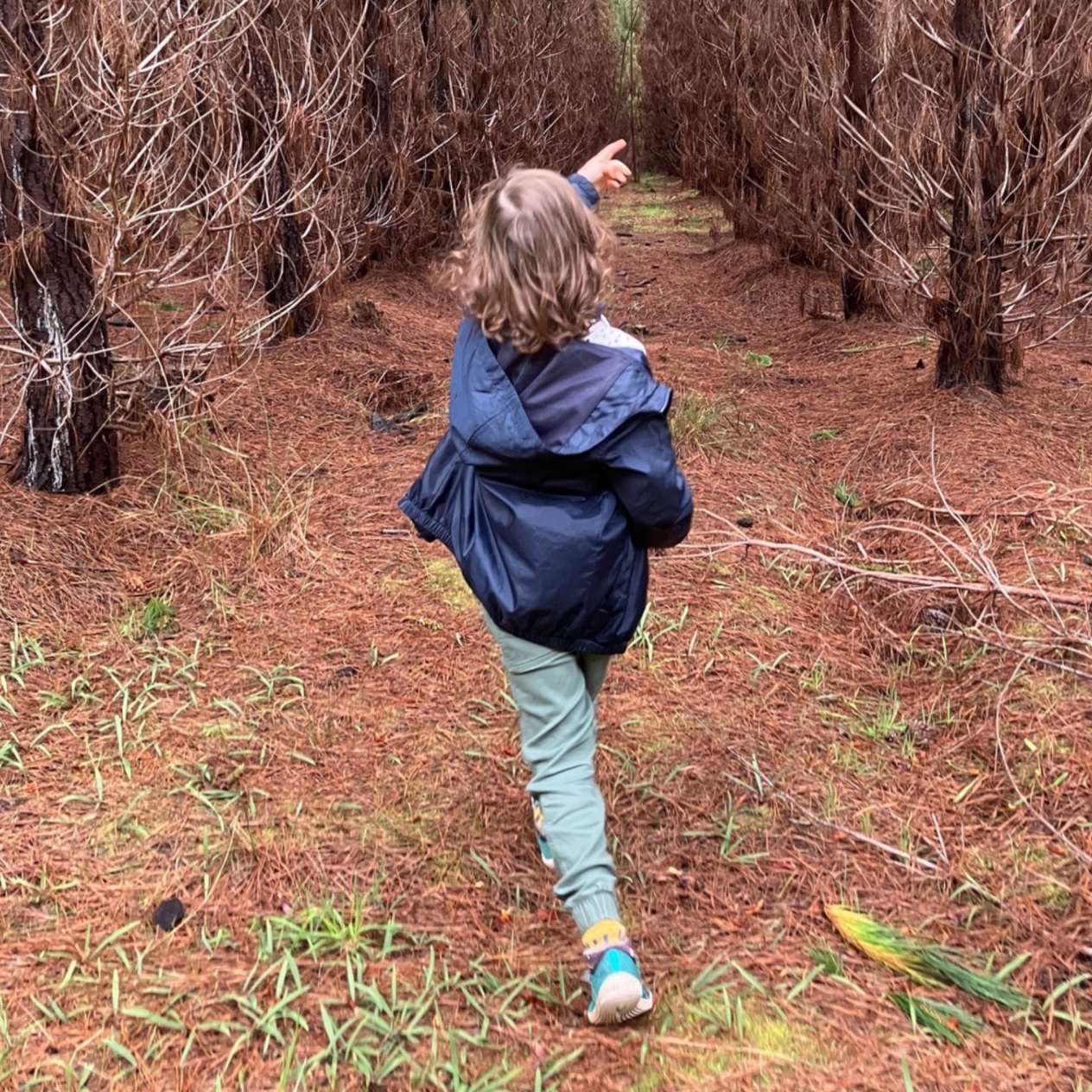
One was held in a pine forest, to coincide with the theme of the story.
The children cooked chocolate-filled bananas over a fire.
They talked about the book, exploring some juicy questions.
Then they ran around and played.
THIS is homeschooling.
Learning doesn’t have to look like school.
It can be so much richer.
And if there’s no book club near you?
Create one.
Put it in your local homeschooling Facebook group.
You might be amazed at how many people are waiting for someone else to organise exactly the thing you were waiting for someone else to organise.
10. Language Schools
This is one I particularly recommend if your child wants to learn another language.
Australia has a number of government-supported language programs and community language schools, although exactly what’s available varies from state-to-state.
For example, South Australia has the government-run School of Languages, which offers language programs outside regular school hours, as well as holiday programs.
Victoria has the Victorian School of Languages, which provides face-to-face language programs mainly on Saturday mornings, as well as distance education.
These programs can be ridiculously affordable (super helpful if you’e homeschooling on a budget) compared with private language tuition.
My son currently does 1.5 hours of Japanese a week for $150 a year.
That’s 40 lessons for the cost of 2-3 private lessons, with native speaking teachers, or teachers who really know the language well.
So definitely investigate what’s available in your state.
11. Look for Extraordinary Opportunities
This one is a little harder to give you a specific formula for, because the opportunities will be different wherever you live.
But keep your eyes open for organisations that offer children experiences that would normally be difficult to access.
For us, one of those has been a cathedral choir.
We found out about it through a friend, and my son was able to audition for the choir.
He was accepted, and now he attends weekly rehearsals and performs at Sunday services.
You don’t need to be religious to participate either.
Our particular choir is primarily focused on the musical education and performance side of things.
And the tuition is incredible.
The focus includes sight-singing and choral technique, and my son’s choir happens to be taught by the head of the state opera.
Which is not exactly your average Tuesday afternoon music lesson!
And because being part of the choir is a significant commitment, the tuition is free.
Their robes are supplied, alongside top notch music theory books for them to work through.
The children even receive a very small payment for performing.
So this is where I want you to start thinking a little differently about homeschooling.
Don’t just look for homeschooling programs.
Look for opportunities.
Look at choirs.
Theatres.
Museums.
Universities.
Community organisations.
Sports clubs.
Arts organisations.
Environmental groups.
Local businesses.
Cultural organisations.
Places where children can learn, contribute, perform, create or participate.
There may be something extraordinary sitting right under your nose that you simply haven’t heard about yet.
For many years in Adelaide, there was a Shakespeare homeschool group that put on the most amazing Shakespeare plays (we saw one, and it was brilliant).
Often these opportunities aren’t really advertised.
Which is another reason those local homeschooling groups are so valuable.
Tell people what your child is interested in.
You never know who might say:
“Oh! You need to know about this…”
And suddenly your child has access to an opportunity you never even knew existed.
12. YouTube and Documentaries
Want to learn how volcanoes work?
Build a robot?
Draw manga?
Learn calligraphy?
Understand quantum physics?
Make a stop-motion movie?
Someone has probably made a YouTube video about it.
Obviously, I’m not suggesting handing your child an iPad and saying, “Go forth and educate thyself.”
My family only spends minimal time on the screen.
But carefully selected online content can be an incredibly useful supplement to homeschooling.
And documentaries can be fantastic too.
We’ve used documentaries as jumping-off points for deeper conversations, projects and research.
The internet is essentially one enormous library.
You just need to curate it.
Which leads me onto…
13. Libraries
I would be financially ruined without our library.
My son reads faster than I can buy books.
So thank goodness for library memberships.
And don’t just look at the children’s fiction section.
Libraries have books on:
- Science
- History
- Mathematics
- Art
- Philosophy
- Nature
- Technology
- Geography
- Languages
- Crafts
- Music
- And pretty much everything else!
Many libraries also have educational games, toy libraries and free events.
Our local library runs things like chess clubs, writing workshops and children’s activities.
So get yourself a library card.
And then use it.
Liberally.
14. Parent Swaps
No.
I don’t mean swapping parents.
Although after a particularly long homeschool day, I can see the appeal!
(I’m joking)
I’m talking about swapping resources.
One family has a pile of science books.
Another has a stack of maths resources.
Someone else has art supplies.
Another family has an enormous collection of board games.
Share them.
Loan them.
Swap them.
You don’t need to own every resource.
You just need access to resources.
There’s a big difference.
15. Create Your Own Experiences
This is where homeschooling gets really fun.
You don’t always need to find an educational program.
Sometimes you can create the education yourself.
Want to learn about business?
Start a little business.
That’s exactly what we’ve done.
My son wanted to earn money so he could invest it (and learn about the share market), so we created a small pet-care business together.
He walks dogs and looks after cats.
He’s also done free animal behaviour and dog-training courses.
So while he’s playing with adorable animals, he’s learning:
Business.
Responsibility.
Communication.
Animal behaviour.
Time management.
Money.
Customer service.
Problem-solving.
And he’s getting paid.
That’s a pretty good classroom.
Oh, and if you want a great program to learn about money, I highly recommend MoneyTime.
My son LOOOOOVED it and learnt so much about finances.
This one’s not free, but great value for the experience and skills your child will gain.
16. Go Swimming
Swimming is an important life skill.
And you don’t necessarily need to pay for a weekly lesson forever.
If you have a reasonable swimming ability yourself, there are plenty of free instructional resources available online that can help you understand basic teaching progressions.
Then go to the pool together.
Or better still…
Go to the beach.
You get swimming, nature, physical education, water safety and a whole lot of sensory experience for the price of parking (unless it’s free where you live).
Which brings me to my favourite…
17. Go Outside
You don’t need a curriculum to go for a bushwalk.
You need shoes.
Definitely snacks.
And possibly a child who hasn’t mysteriously forgotten how walking works.
Go bushwalking.
Look for wildlife.
Identify trees.
Collect leaves.
Draw what you see.
Make a nature mandala from things you’ve found on the ground.
Read about the local ecosystem.
Learn bush survival skills.
Take a picnic.
Invite another family.
Light a fire (if it’s safe and permitted).
Suddenly you’ve covered science, geography, art, physical education, environmental studies, social development and practical life skills.
And it cost you…
Nothing.
There’s also growing research supporting the value of free play for children’s development and wellbeing.
For example, Australian longitudinal research has found associations between children’s free-play time and later self-regulation.
Sometimes the best educational resource is simply:
Time.
…the real secret to homeschooling on a shoestring.
But here’s the biggest thing I’ve learned after almost 18 months of doing this.
You don’t need to create everything yourself.
You do need to become curious about your community.
Go to the homeschool meet-ups.
Talk to the parents.
Talk to the kids.
Join the Facebook groups.
Get to know your local library.
Check the council websites.
Find the community groups.
Look for government programs.
Ask questions.
And tell people you’re homeschooling.
Because once you start talking to other homeschooling families, you’ll discover that people are constantly finding fascinating things.
“Oh, you like Japanese? You need to know about this program.”
“Your son likes science? There’s a family running a science group on Thursdays.”
“He loves animals? There’s a local wildlife volunteer program.”
“You’re looking for books? I’ve got a whole box I’m giving away.”
This is how homeschooling becomes a community education rather than simply mum sitting at the kitchen table trying to teach every subject known to humanity.
And honestly?
That’s one of the things I love most about it.
My son isn’t just learning from me.
He’s learning from teachers, parents, grandparents, scientists, musicians, artists, business owners, librarians, volunteers, children, strangers, nature and life itself.
And that is a pretty incredible education.
So if you’re looking at homeschooling and thinking:
“But how on earth am I going to afford all of this?”
Take a breath.
You don’t need to buy everything.
You don’t need to recreate a private school in your living room.
And you certainly don’t need a giant homeschooling budget.
Start with what’s already around you.
Because chances are, there’s far more available than you realise.
And if you know of other free ways to homeschool your child/ren, please share it in the comments.
Because if there’s one thing I’ve learned from the homeschooling community, it’s this:
We are much better at this when we share what we find.